


How To Choose The Right Computer

If you are in the market for a new computer you probably know how big of a decision you are about to make. They are hundreds or even thousands of dollars and you will have it for years to come, so it is important to make the right choice. Below are some things to think about when deciding on your next computer.

Desktops Vs Laptops

A few years ago this was a real choice you had to make. Previously, desktops were much more powerful and capable of a lot more than laptops, but that is no longer the case. Laptops today can do everything desktops can and often times even more. Unless you have a specific need for a desktop (a lot of computer games, movies, etc.) there is really no point in getting one. Laptops are much more convenient as you can travel with them and use them from anywhere in your house. Since your place is likely wifi capable, a laptop seems like the obvious choice.

Size

There a few different sizes you need to be concerned with when choosing your next computer. If you know you will be traveling with it a lot or using it for work, you might want a lighter, smaller laptop like an Apple. If you are not as concerned with weight and would prefer a heavier laptop with more power an HP might be right for you. The next size to consider is the size or amount of the memory on the computer. This can be determined a few different ways, but if you are not a technical person it is a good idea to ask someone who is for help. You want to be sure that the computer will have enough memory to do the things you need to do on it. Finally, you will want to check the size of the physical screen you will be looking at. You may want a bigger screen if you know you will be using it to play games or watch movies. A smaller screen means less weight and is often good for college students just using it for school work. Size is one of the most important factors when deciding on a computer. Getting the wrong size can really hurt you and cost you money in the long run.

Power

Most of the computers on the market will be able to do everything you would ever need them to, with some exceptions. You probably don’t need to be very concerned with your computer not doing enough, but rather it doing too much. You don’t want to buy a new computer that is extremely powerful if you don’t really need it. The more powerful the computer, the more expensive it is. You will pay a lot up front for power that you get nothing out of if you don’t buy the right computer. The best way to decide what computer is right for you is to talk to someone who knows a lot about them if you don’t yourself. This does not mean talking to the people at the store about it as they probably want to sell you more expensive models than you may need.

There is no easy way to buy a computer and just going for it is never a good idea. You don’t want to waste time or money with a computer that does too much or too little for you, so be sure to choose carefully!

The Strangest Pets In The World

Chances are we have all had a few pets in our day, usually a cat or dog. But for some, a cat and dog just doesn’t do the trick. Having a strange pet can bring with it some strange challenges and issues. These are a few of the strangest pets that are owned around the world.

Skunks

I know what you’re thinking, “who would ever choose to have skunk around”. Skunks are known for their awful scent and are generally mean animals. You can’t take in a wild skunk and try to domesticate it, for more reasons than one. The main one being the scent when they spray. We have all smelled a skunk outside, so imagine having that confined to your home. To keep a skunk as a pet, like most exotic animals, you need to get them at a young age and domesticate them. Step one to domesticate a skunk is to remove their scent glands, usually done in the first month of the skunks life. Owners need to spend a lot of time with the skunk when they are young since it is their instinct to avoid humans. If nurtured by the human when they are young, domesticated skunks are said to be sensitive and curious animals, similar to a house cat. However, if you are thinking of adopting your own pet skunk, be sure to check with your state first because it is illegal in most of the country.

Wallaby

Wallabies are essentially smaller versions of kangaroos. They are native only to Australia and are known for their high speed hoping, so to have one as a pet requires a lot of space. The need for space makes wallabies a bad pet for most people. They are also very social animals and need to be with another or a group of other wallabies. Another issue with domesticating a wallaby is that they are naturally nocturnal, so you might be up all night trying to bond with yours. They are not easily house trained and their leaping ability makes it very hard to contain them with a fence, so wallabies are a bit of a handful to own as a pet.

Sugar Gliders

Sugar gliders are probably the most viable pet option on this list for most people. They are only about 7 inches and weigh around 5 ounces, making them smaller than most squirrels. They are generally sweet and social animals and don’t mind human interaction. However, sugar gliders are a bit of a challenge to own due to their ability to glide. In the wild sugar gliders can glide from treetop to treetop, traveling hundreds of feet through the air at times. This means in order to have one as a pet, you would need an enclosure big enough to allow them to glide, but still enclosed in a way that prevents them from gliding away. They are nocturnal so finding time to spend with your sugar glider could be a little tough. As with skunks, sugar gliders are considered exotic pets and are only permitted to be domesticated in certain states.

Capybara

Capybaras are the largest rodents in the world. They are a close relative to the guinea pig, so domesticating them isn’t that crazy of an idea. Capybaras have recently gained some fame due to social media. People who have Capybaras as pets make accounts for them and document their cute and often comical behavior. Owning a capybara requires a lot of outdoor space for them to roam and most importantly a place for them to swim. They are aquatic animals that enjoy spending time swimming so they require a unique habitat. Capybaras can be nasty at times, so you need to make sure you get them at a young age if you plan on keeping one as a pet.

So, if a cat or dog just doesn’t quite cut it for you, you might want to think about trying a goldfish first, because exotic pets like the ones above can be a bit of a handful. These pets aren’t allowed in most states, let alone luxury apartments buildings, so we don’t recommend looking to adopt any time soon.


The Craziest Ways to Fill Out Your March Madness Bracket

Even if you don’t know much about March Madness, you’ve probably heard of the bracket. Each year, sports fans make their best guesses as to who will advance toward the college basketball tournament finals – and who won’t. While you could make your picks logically, based on things like team performance and expert predictions, that just isn’t as fun as making a wild guess. If you’re going to make a wild guess, it might as well be a fun one, so try some of these crazy methods for filling out your March Madness bracket.

Going By Your Favorite Mascot

College basketball mascots–like mascots in any sport–can range from cute to just plain weird. With everything from jackrabbits to Spartans to… boilermakers, the conferences have a good mix of fun and playful mascots that represent their teams. Whatever your opinions on the various characters, use those thoughts to help guide your NCAA tourney picks. Bonus option: choose based on which mascots you think would win in a brawl against each other.

Copy Celebrity Brackets

Not a college basketball buff? Then you’ll probably be relying on the advice of others to guide your bracket decisions this season. While the smart option would be to go with picks from your sports buff friends or even more highly-qualified sports journalists and commentators, you could throw caution to the wind and go with what your favorite celebrities think of the Madness is this year.

Go Random

If you’re really at a loss for your bracket picks, you could always leave your decisions entirely up to Lady Luck. Flip a coin, pull names out of a hat, throws darts at the wall – whatever works for you! Be forewarned: this probably isn’t going to result in a winner bracket. But hey, yours is still going to end up being more successful than at least a few people’s picks.

Decide Based on College Football Performance

Perhaps basketball just isn’t your game. That’s fair. On the other hand, if you know your college football pretty well, you could just make your picks based on your feelings about the various football programs. Buckeyes fan? Show the Ohio State University a little love. Root for the Fighting Irish during the fall? Make Notre Dame one of your top picks.

Choose Academics Over Athletics

Can a university’s overall academic performance accurately predict its basketball players’ performances during March Madness/ Probably not, but it is an interesting way to make your picks. While the Ivy Leagues aren’t represented in this tournament, there are still some heavy-hitting (in an academic sense) schools that will play one another. Duke and Notre Dame are among the “smartest” schools that’ll be playing in the tournament.

Go Against Your Gut

Remember that episode of “Seinfeld” where George did everything opposite of what \he would normally do and ending up being incredibly successful? Maybe that’s what’ll happen if you decide to go against your gut and choose the teams you wouldn’t normally choose. This works even better if you have your last year’s bracket – just flip it inside out.

What Is the Future of Virtual Reality and How Is It Being Used Now?

Virtual reality might seem like a futuristic pipe-dream straight out of a 1980s sci-fi flick. However, the technology, or at least some form of it, is no longer a dream; it’s very real and being put to use at this very moment. Here’s what you need to know about today’s VR and how it’ll be used in the future.

Virtual Reality and Gaming

With little doubt, the biggest improvements in virtual reality technology are coming from the video game industry. While many, many tech companies have at least some stake in VR projects, a three-way rivalry between HTC, Oculus, and Sony–which produce the Vive, Rift, and PlayStation VR, respectively–is pushing interactive gaming to newer and greater heights. While these gaming headsets cost hundreds of dollars, they offer a near-indescribable level of immersion that you can’t get by playing a video game on a TV, even if it is 4K.

Competitive Drone Racing With VR

One interesting application of virtual reality combines the technology with another gadget that’s in vogue these days: drones. Drone racing is a fast-paced sport that pits quick-witted pilots against each other as they fly their drones through glowing hoops. The twist is that these pilots first strap on a VR headset, which streams a first-person view of the device they’re controlling. It’s a dizzying prospect, but it’s one that’s already proven to be popular, with ESPN having broadcast races on its channels during 2016.

Putting VR Into the Hands of the Consumer

There’s nothing stopping you from going out and buying a VR headset right now – except, perhaps, the price. With high-end headsets costing at least $500, that kind of investment can be a little hard to swallow if you’re looking to just dip your toes in the virtual reality waters. Smartphone companies have leapt to plug this lower-end market, with Google and Samsung both offering less expensive VR headsets that use your phone to power the visuals. While these headsets are far less powerful than the higher-end products from HTC, Oculus, and Sony, they’re still a great demonstration of what virtual reality can do.

The Future of VR

It’s a little hard to properly state just how cool VR can be unless you’ve tried it yourself. Once you strap a headset on and actually feel like you’re on top of a mountain, at the bottom of the sea, or in space, you’ll see how exciting the future of VR’s going to be. While gaming will surely benefit from the immersion of virtual reality, expect to see classrooms, from elementary school to college, make use of its potential visual teaching capabilities. Other industries, like architecture, medicine, and aerospace, will also benefit from life-sized 3D models running in lifelike simulations. In all, the possibilities are truly endless.

You might not believe in virtual reality. That’s fair, as a lot of interesting technology has come and go in the past few decades. However, if the future of VR turns out the way many hope it will, it could end up as big as the internet and social media. One day, our decescents may very well laugh at our primitive flat-screen TVs as they strap on their VR headsets.

Whatever Happened to Drive-in Movie Theaters?

The drive-in movie theater is a nostalgic symbol of the mid-20th century. Although we still have regular movie theaters, it’s a little odd that drive-in movie theaters are few and far in between, so much so that they’re considered a bit of a novelty these days. So, what happened? Read on to learn more about the rise and fall of the drive-in movie theater.

How Drive-in Theaters Got Their Start

The history of drive-in movie theaters goes back, perhaps surprisingly, to near the beginning of cinema itself. While silent films got their start in the 1890s, the first drive-in theater concept popped up in New Mexico in 1915, just as cars themselves were gaining ground with consumers. This outdoor theater, the Theatre de Guadalupe, wasn’t designed specifically for cars, and in fact, it boasted more seats behind the makeshift parking lot. It wasn’t until 1921 that the first dedicated drive-in was opened in Texas, but again, this theater was more makeshift than permanent drive-in.

Drive-in Theaters Gain in Popularity

The east coast, and New Jersey in particular, played a large role in making drive-in theaters a popular attraction. In the 1930s, Businessman Richard Hollingshead, Jr. patented a drive-in concept and opened up his own theater in Pennsauken Township. The theater, which sadly no longer exists, was the first of its kind to make use of drive-up ramps, which allow the occupants a better view of the screen. While Hollingshead is widely considered to be the one who perfected the drive-in theater, he sold the theater after only three years, and his patent was overturned in the 1940s. By the 1950s and ‘60s, drive-ins were at their most popular, with about 4,000 drive-ins open across the country.

The Decline of Drive-in Theaters

Nothing good can last forever, and just as quickly as drive-in theaters became popular, they started losing customers. There doesn’t seem to be any one main reason why this happened, but there are plenty of factors that caused them to go into decline. Many say that the oil crisis during the 1970s – and the subsequent spike in gas prices – made families less likely to go out driving for their entertainment. Further, the advent of VCRs meant that, for the first time, families could enjoy films at any time in the comfort of their own homes. As drive-in theaters lost customers, they began running more controversial, less family-friendly programming, which led to some backlash.

Down, But Not Out

While drive-in theaters have gone through a drastic decline in the past 40 years, they’re not completely dead. Actually, a good handful of them exist – about 300 or so in the United States. Will they ever become as popular as they once were? Almost assuredly not. With regular cinemas facing their own battles against the growing home entertainment market, the more niche drive-in theaters have an even tougher time selling tickets and drawing crowds. That said, drive-ins are still a novelty, a throwback to the 1950s and ‘60s, when going to the movies was a purer experience. As long as that’s true, there will probably be a drive-in theater open somewhere near you.

What to Do With Gift Cards That You Have No Use For

The gift card might be considered a tacky present, but you can’t deny its usefulness. It serves the perfect middle ground for a gift-giver who wants to show a little thoughtfulness while also leaving the gift fairly open for the gift-receiver to find something they really want. However, giving gift cards doesn’t always go perfectly, resulting in cards that go unused, expired, and ultimately, wasted. If you’ve found yourself on the receiving end of poorly-considered gift cards, here are your options.

Return Them for Cash

This will likely be your first go-to option. Naturally, each store’s return policy differs, especially during the holiday season, and their options for returning gift cards might actually differ from the options concerning other products as well. So, you’ll want to do a little research before you try returning your gift cards. There is a chance that you’ll need a receipt in order to make the exchange, so whether or not you want to ask the gift-giver for the receipt will be up to you.

Trade Them for Other Gift Cards (or Money)

If it’s been too long since the gift cards were bought, or for some other reason you can’t return them, you can still get your money’s worth back. Unwanted gift cards are not a rare phenomenon, so multiple online marketplaces have sprung up in the past years to cater to those looking to sell and trade unwanted cards for cash or ones that are more relevant. You might even have better luck asking around your family and friends. Nothing beats skipping the middleman and getting cash in return.

Regift Them

Sure, regifting something that was gifted to you might be a little tacky, but if no one’s the wiser, what’s the big deal? If you know someone who has a birthday coming up and you don’t know what to get them, this can be the (gift) card up your sleeve. There are a few caveats to this option, though. First, you’ll need to be sure that the gift cards don’t expire in the meantime, or that they haven’t already. Also, don’t make the same mistake that the original gift-giver made. Be sure that this recipient will actually have a use for these cards!

Give Them Away to Charity

Maybe you don’t have anyone in mind to regift the gift cards to. That doesn’t mean they have to sit and go unused. There are plenty of people in need out there, and for lack of better uses, you could put those unused gift cards toward helping someone. There are a few charitable organizations out there that accept gift cards, but you might even find that your local shelters and thrift stores would be happy to accept them.

Reassess How You Could Use Them

Just because the gift card is for a merchandiser you might not shop at, you might be surprised to find that they carry some products you can still make use of. If not, you could ask the gift-giver how they might spend the gift card. They’ll probably be happy to share with you some tips on how to best spend the money. At worst, you could always buy a product with the gift card and then give that item away – or sell it.

The History of the New York City New Year’s Eve Ball Drop

People all around the world come together once a year to celebrate New Year’s Eve, but there might be no place that’s as popular with celebrators than Times Square in New York City. Every December 31, millions gather on the streets of the city to enjoy musical performances and count down to the start of the new year, all with the help of a giant metallic ball that drops from the sky. When you stop to think about it, the ball drop is a bit of an odd tradition. How did this practice begin, and how has it changed over the years?

The First Times Square Celebration and the First Ball Drop

Unsurprisingly, the giant ball we associate with New Year’s wasn’t present at the first official New York City celebration, which New York Times owner Adolph Ochs hosted in 1904. Ochs, who was inspired by time balls–which have their own history in sailing–he’d seen on a nearby building, commissioned the creation of the first ball, which was put on display in 1907. The ball, a product of the sign design firm Artkraft Strauss, was made of wood, metal, and light bulbs. It was five feet in diameter and weighed 700 pounds – much, much lighter than more recent versions of the ball.

Changes to the Ball Over the Years

There have been only a handful of designs of the New Year’s ball, which is a little surprising considering that the traditional has gone nearly uninterrupted for more than 100 years. While the ball has always consisted of a similar combination of metal and lights, its redesigns have reflected the cultural and technological changes of their time. For instance, the third ball, which was used from 1981 to 1995, was adorned with red lights to give it the appearance of an apple, as in NYC’s namesake, the Big Apple. The current ball, introduced in 2009, is 12 feet in diameter, weighs nearly 12 thousand pounds, and contains 32 thousand LED lamps. Talk about an improvement!

Years Without a Ball Drop

While the ball drop tradition has carried on steadily for the past century, there are a couple of notable exceptions. In 1942 and 1943, at the height of World War II, the city faced daily lighting restrictions. Although merrymakers still gathered in Times Square to mark the turn of the year, the events were a little more subdued. Rather than play music and set off fireworks at the stroke of midnight, celebration organizers instead held a minute of silence to honor those fighting in the war.

New York Isn’t the Only City to Drop the Ball

The New Year’s ball drop is iconic, so it’s not very surprising that places all around the country have similar traditions. However, while many cities hold similar ball drops for partygoers who want to celebrate in person, it isn’t always a ball that’s being dropped. Oftentimes, the city will instead drop an object that’s somehow related to that place’s history. For instance, Allentown, PA drops a liberty bell replica, symbolizing its history in restoring the bell during the American Revolution. Miami drops a big orange called “Mr. Neon.” And, oddly, the small town of Elmore, OH drops a sausage.

While there doesn’t seem to be much to the famous New York City ball drop, it has a long history and a lot of imitators. So, the next time you find yourself celebrating with loved ones and watching the celebration on television, you’ll know just how this tradition got its start.

The Best Thanksgiving Parades in the Country

Each year, we can count on a few traditions to take us through the Thanksgiving holiday season. If you’re not around a TV on Thanksgiving morning, it might be easy to forget one tried-and-true tradition that’s been happening for nearly a hundred years: the Thanksgiving parade. Here are some parades worth checking out as you get ready for the rest of your Thanksgiving day.

Macy’s Thanksgiving Day Parade in New York City, NY

If you’ve watched any Thanksgiving parades on TV, chances are you’ve seen the Macy’s Thanksgiving Day Parade. It’s by far the most popular Thanksgiving parade, and plenty of families across the country make a point to tune in each Thanksgiving morning to catch the countless parade marchers and the enormous balloon floats. The Macy’s Thanksgiving Day Parade has been going strong since 1924 and shows no signs of stopping. If you’re not sure which Thanksgiving parade to watch, the Macy’s parade will be your best bet.

America’s Thanksgiving Parade in Detroit, MI

It’s no secret that Detroit has been through some rough times in recent years, but there’s still some optimism to be found in its annual America’s Thanksgiving Parade. The parade has been running down the city’s main street, Woodward Avenue, since 1924 – the same year that Macy’s Thanksgiving Parade premiered. While this parade may not quite match the sheer spectacle of the Macy’s parade, you can still expect tons of floats and participants.

America’s Hometown Thanksgiving in Plymouth, MA

When you attend (or tune in to) a Thanksgiving parade, you probably know what to expect: floats, music, and performers. America’s Hometown Thanksgiving parade in Plymouth has all of that, but seeing as the town has a rich history and is said to be the site of the first Thanksgiving, tis parade skews toward the historical. Floats tell the history of the United States, from the colonial period of the 1600s to the present, offering not just some good Thanksgiving entertainment, but a history lesson, too.

H-E-B Thanksgiving Day Parade in Houston, TX

Many of us associate the end-of-year holiday season with cold weather, so it can be a little odd to see participants in the H-E-B Thanksgiving Day Parade marching around in short-sleeved uniforms. Yes, Thanksgiving and the rest of the holidays still happen in Texas, snow or not, which means there has to be a parade packed full of floats and entertainment to go along with them. Santa Claus’ appearance at the end of the parade may not quite gel with his snowless surroundings, but that won’t stop you from being jealous of the parade bystanders who get to watch the show in T-shirts.

6abc Dunkin’ Donuts Thanksgiving Day Parade in Philadelphia, PA

If you thought Macy’s Thanksgiving Day Parade and America’s Thanksgiving Parade had a long history, take another look – Philadelphia’s annual Thanksgiving parade, which began in 1920, has four years on the other two parades. While the parade has changed names through the years–it’s been sponsored by IKEA, MasterCard, and more–it never fails to delight its audience with a wide array of colorful floats. So, while the parade stands on its own entertaining merits, it’s worth tuning in to for the history alone.

A good Thanksgiving parade makes for a great Thanksgiving tradition, so why not turn on the TV (or point your web browser to an online stream) to check one out? Better yet, if watching on the TV isn’t quite enough, you could always look for local parades to attend. While a real-life parade might not offer the comforts of home, the entertainment is bound to be larger than life!

So You Save Some Money on Black Friday, But Is It Worth It?

As time passes, many decry the monetization of many of our precious holidays. On the other hand, Black Friday has always unabashedly been about spending money on things. The day, which falls on the Friday after Thanksgiving, is renowned for the deals retailers offer on customers looking for cheap deals on holiday gifts. But with the Internet becoming a larger factor in people’s shopping happens, along with the general unpleasantness of the day, is Black Friday really worth the hassle anymore? Here are some factors to consider.

Black Friday vs. Other Sales

We all know Black Friday for being a day packed with savings, but that doesn’t necessarily mean you’ll be getting a better deal than you would at another time. It all depends on what you’re purchasing. While this is probably your day to save big on a television, other products are better bought on other sales-related days, like Labor Day. Further, the growing popularity of Cyber Monday means retailers will probably continue to stretch their deals for longer than just one day.

Remember that when you’re shopping around, you don’t necessarily need to buy something new. Buying something gently used can often net you the same savings you’d find at a Black Friday event or something similar. Plus, buying used is good for the environment, and your money goes to help an individual rather than a big company. So, before you head out to the big-box supermarket, take a look online or ask around to see if anyone has what you’re looking for.

Negative Consequences

Black Friday might be all about low prices, but there are some things you can’t put a price on.

If you’re going to spend the day shopping in person, you’ll probably have to deal with some crowds. You might’ve seen the chaos and fights that break out in some stores each year. While that probably won’t happen wherever you’re going, you might still have to deal with some unpleasantness that you wouldn’t find on any other day.

Also, what about the poor retail workers who have to show up on Black Friday? Put yourself in their shoes, or do a little reading online to see what kinds of horror stories they have to put up with on this day. While you might come out ahead with a cheap flat-screen TV, is it at the expense of workers who feel like they aren’t being paid their worth? The ethics of Black Friday seems to become more of an issue each year, and it might be something you want to think about before heading out to shop.

Do You Really Need That Thing?

One of the most important things to remember on Black Friday, and any other day for that matter, is that you’re not saving money if you’re spending it on something you won’t use. Don’t forget that the retailers want you to spend money on things, and the products they advertise might look more attractive than they really are.

Now, all this isn’t to say that Black Friday isn’t all-in-all a bad thing. Ideally, you’ll find a product that makes you happy, at a cheaper price than you’ve found elsewhere. As long as you’re a smart shopper and you do a little research before you drop the big bucks, you can consider your Black Friday shopping a success.

What’s the Deal With the New Chips in Debit Cards?

If you have a debit card that you use in person, you’ve probably noticed a big change in the past year or so. More and more, you may be entering your card into the point-of-sale terminal, rather than swiping it. Although the process has a few differences–you might not have to sign a receipt, for instance–you may not see what all the fuss is about. However, the new way of doing things, called “chip and PIN,” offers customers some behind-the-scenes benefits that protect them from fraud and other abuse.

History of Chip and Pin

This new chip-and-PIN method isn’t anything new, and in fact, the United States is way behind the times in adopting the technology. For more than 10 years, the chip-and-PIN method has been the standard in Europe, where it’s used to help combat fraud. So, why has America struggled to catch on? There’s no main reason, but many point to the size and complexity of the States’ banking system, which makes adoption difficult, along with the lower rates of credit and debit card theft that make the system a lower demand.

The New Card

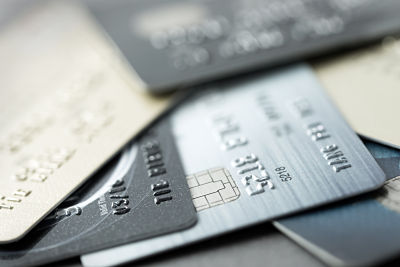
If your bank has already sent you an up-to-date debit or credit card, take a close look. Embedded within the front of the card, you’ll see the new chip, which is either gold or silver and about the size of your pinky nail. However, flip the card over and you’ll also see the old magnetic strip as well. If you’re a regular shopper, the reason for having both technologies should be pretty obvious: many retailers still need to catch up to the chip-and-PIN system. Again, this is why the American banks have put off embracing this new technology – it takes a lot of effort to roll out.

How It Works

Put simply, when you swipe your card, information about the card and your corresponding bank account is sent to the business. Of course, you’ll often have to sign or enter your PIN to complete the transaction. The new chip system improves on the old system by doing away with signatures, which offer less fraud protection that PINs. Even if you’re used to entering a PIN with your swipe card, your chip card keeps you better protected by changing the data your card sends to the business each time you use it. This makes it much harder for thieves to make a false copy of your card.

The Future of Debit Card Chips

Although chip-and-PIN cards are more secure than swipe cards, their introduction to the United States is a little poorly timed. That’s because a new system of banking, using smart phones and smart watches, threatens to take over transactions. All the big names in the tech world have started up their own payment systems, which require the user to simply tap his or her phone or watch to the payment terminal to make a purchase. Still, this technology is new and doesn’t have the same support as the push to make chip-and-PIN popular. So, even though we’re becoming more dependent on our mobile banking, it might be some time before we can ditch our plastic once and for all.